For quite a few months I had been interested in being the ‘Guest Astronomer’ (GA) at the Sossusvlei Desert Lodge in Namibia. Our club had Mark Radice coming to give a talk about his experience of being out there at the June meeting. After listening to the talk and getting the required permission from the wife who did not want me to go but said ‘It is an opportunity of a life time not to miss’, I got the green light to go. Talking the General Manager of the Lodge, I was due to go out in November for around four weeks, turned out it would be five as I wanted a hand over form the current GA, to see what I was required to do, turns out the current GA would be Mark!
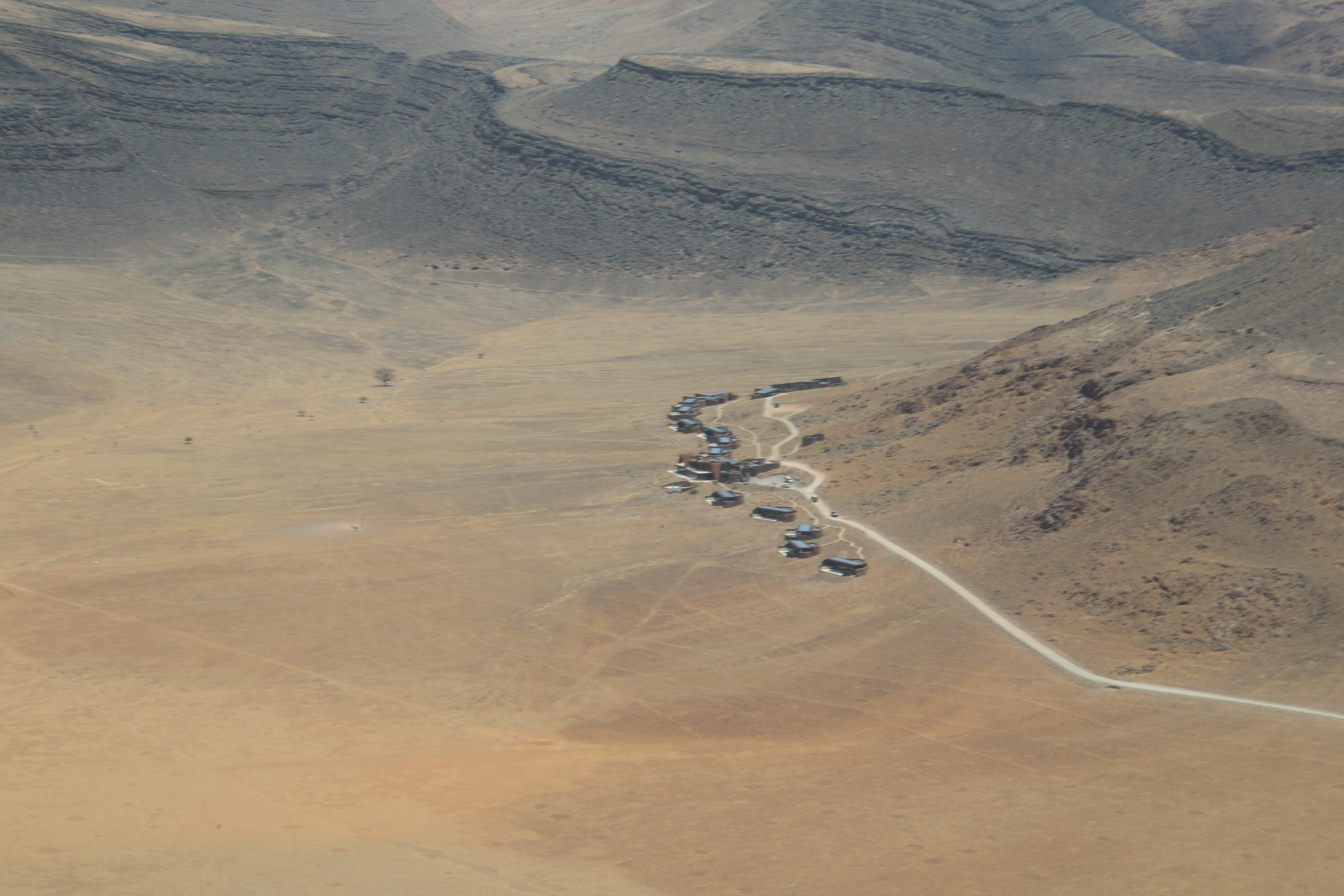
I left Swindon on the 29th of October and would be flying on my birthday, my flight went via Munich to Windhoek and then a five plus hour trip by road to the Lodge! The Lodge was about 330 km from Windhoek and not all of the road were covered in tarmac, the last hour plus would be gravel. But for some reason I was taken to the local airport and would be transported by air to the Lodge, this would knock about three hours off of my trip.
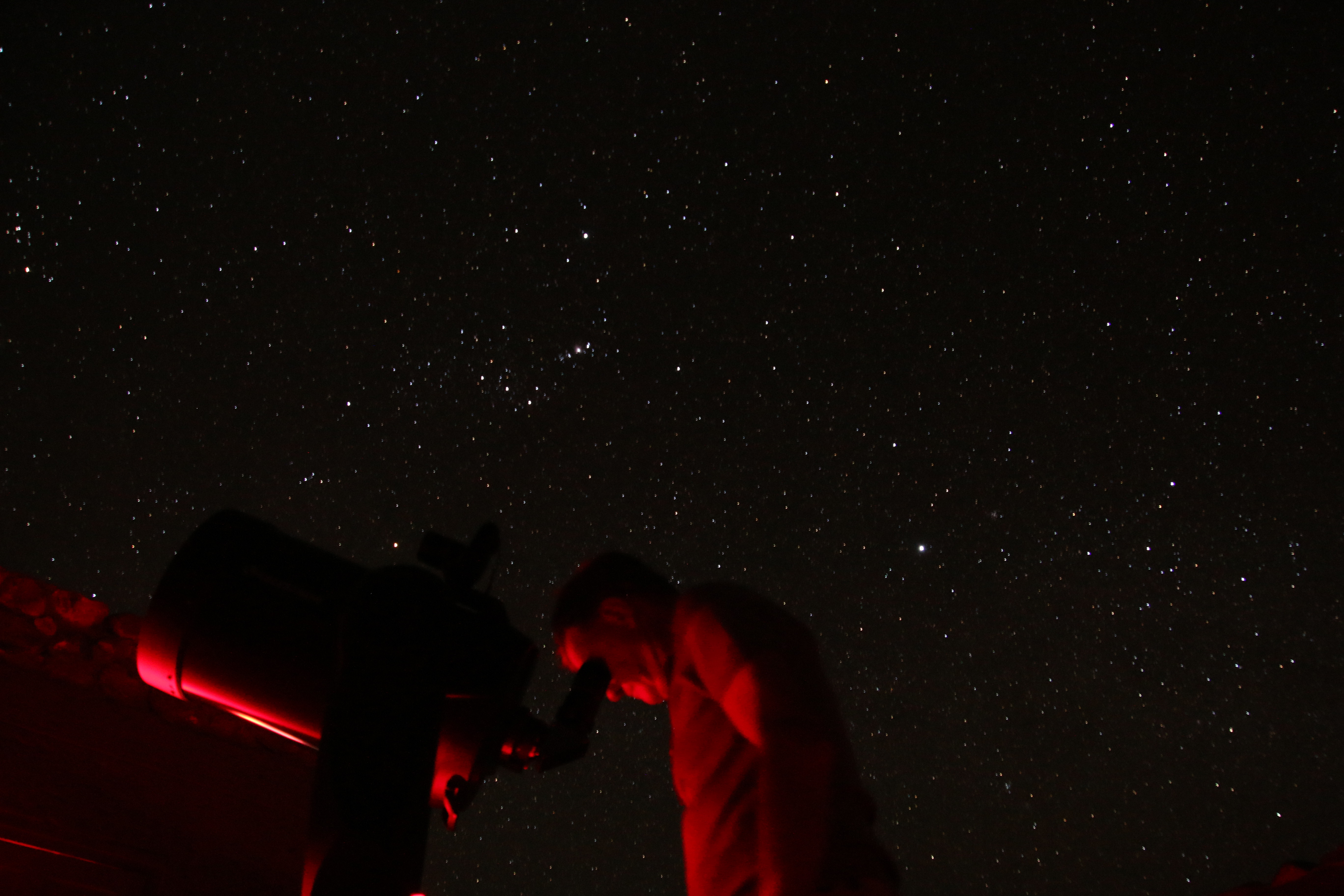
Celestron 11” CPC GOTO
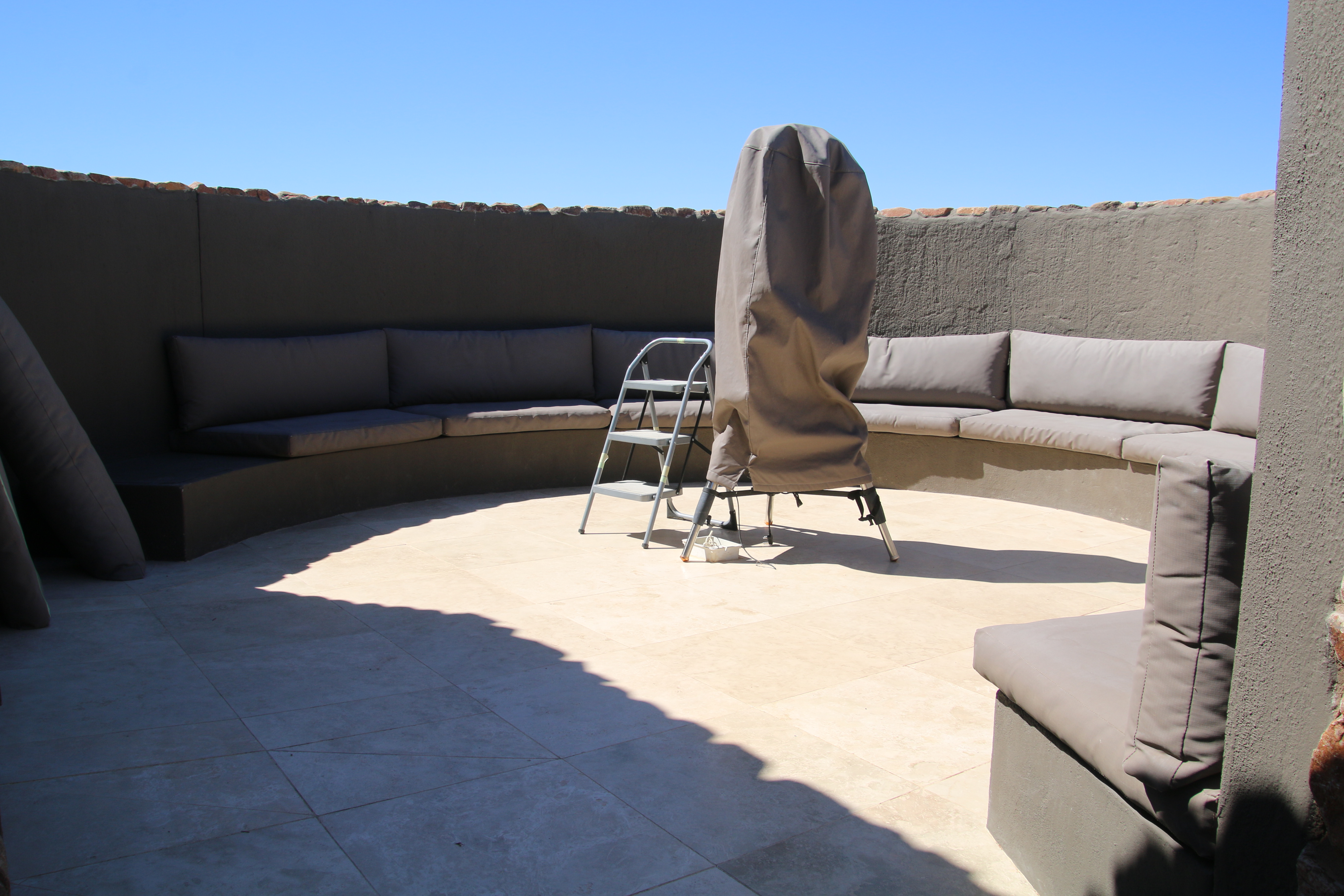
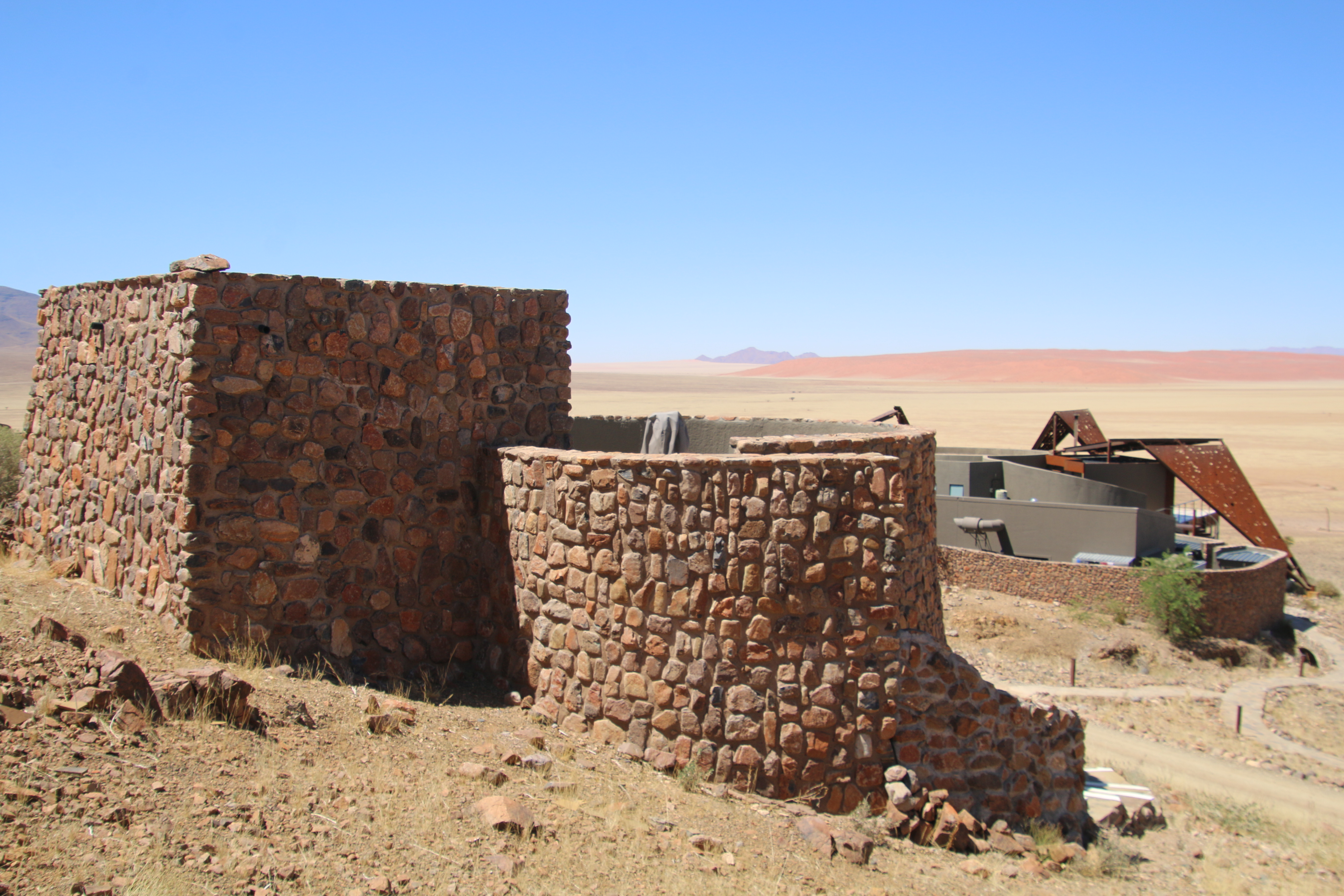
The viewing compound
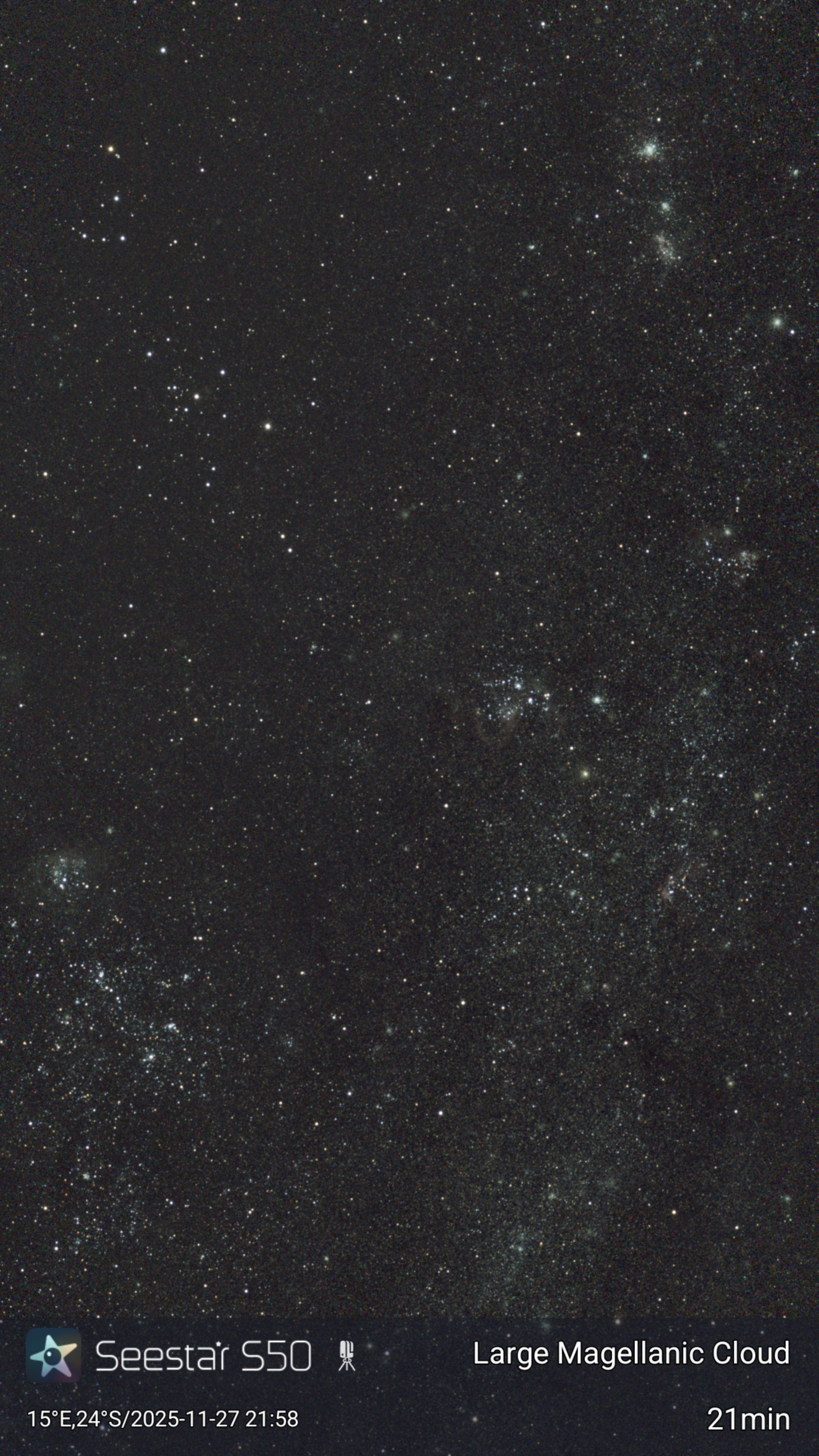
After getting the handover from Mark, I was on my own. I showed the guests various stars, the only two planets on view (Neptune and Saturn), plenty of deep sky objects and one arm of the Milky Way near Scorpio which would set fairly quickly after sunset. There was two ‘clouds’ always in the sky, these are the Large Magellanic Cloud (LMC) and Small Magellanic Cloud (SMC) assuming the skies were clear, which happen on all but three nights of my trip. The viewing log is from the whole of November and not necessary on any special night.
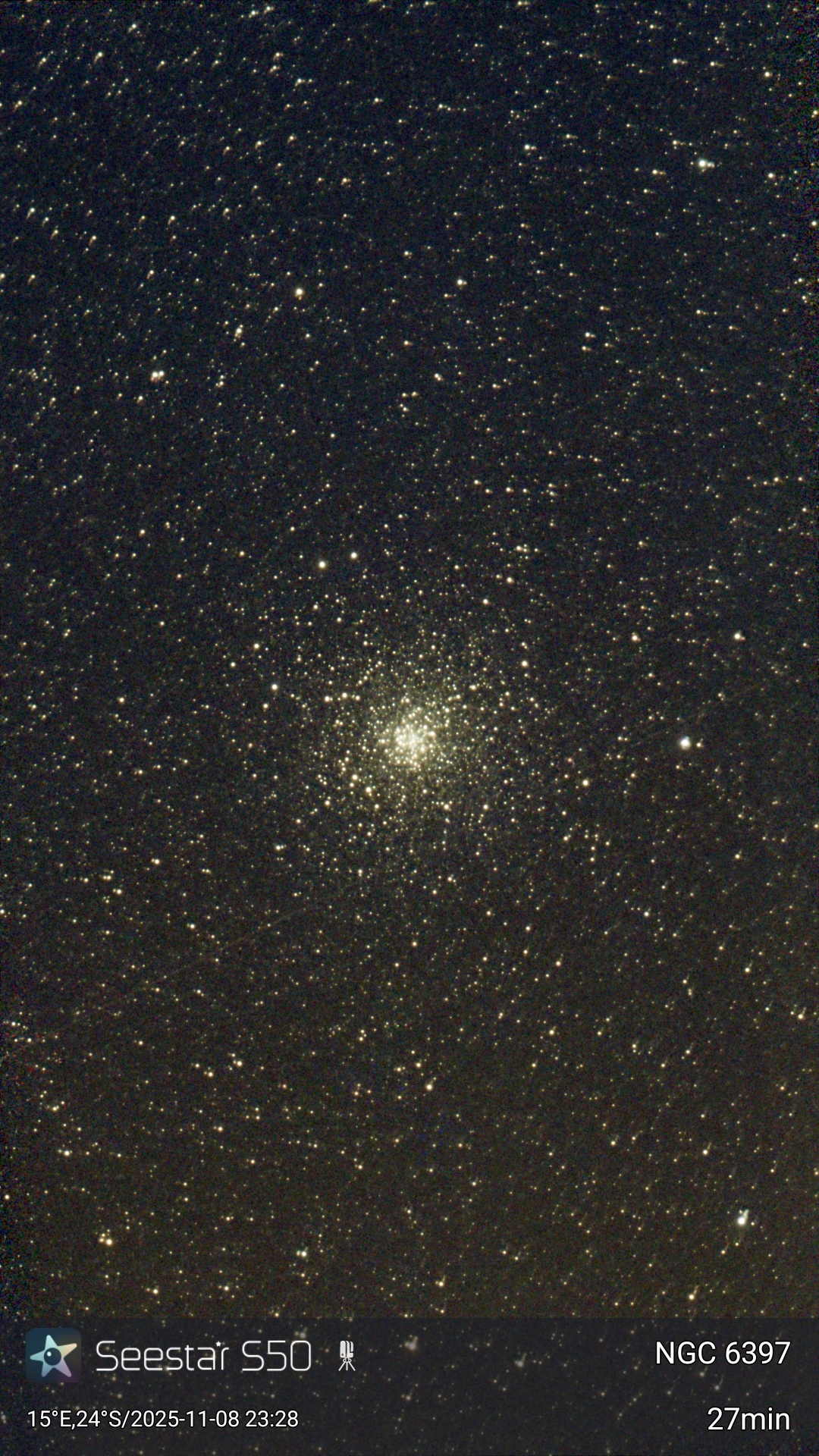
The Lodge is at 24.8 ° south and 15.9 ° east, so objects in the sky I would not have seen or knew much information about them or if I have seen them before they would be upside down! My uniform for the whole month was short sleeve shirt, shorts and sandals, as the temperature was between 18 and 25 ° C when I started viewing. The telescope at the Lodge is a Celestron 11” CPC GOTO telescope, I would be using a Hyperion 8 to 24 mm zoom eye piece which I borrowed from Mark and returned to him just after Xmas. Mercury was above the horizon early in November in Scorpio but soon disappeared behind the hills. I could make out Scorpio and Sagittarius very clearly in the western sky, these would be very low if they could be seen from the UK at this time of the year? When the moon was out of the way, the sky was very clear, I could make out the LMC & SMC and the Milky Way with no trouble, this area of sky is Bortles 1, which is the best you can get on the whole planet. The nearest town is around 70 + miles away, so no real light pollution apart from the moon when it was out! At full moon is was hard to make many objects out in the sky apart from the brighter ones like Saturn or Sirius (brightest star in the night sky) with the naked eye, I would not be able to see the LMC or SMC. When I started the southern skies were strange to me but as the nights went by I got to know them better, even found the ‘False Cross’ which can be easy to overlook. While I was down here my main goal was to get all of the Caldwell objects if possible, this is the challenge for club members in 2025 but from the UK the limit is around 65 of the 109 on the list. In the end I got all but one of them as it was too close to the sun to be seen. In the constellation of Norma is Caldwell (C) 89, a large but loose open cluster (OC) in the shape of a ‘V’, they are some bright stars in this cluster. In Ara is NGC 6397, a small loose globular cluster (GC) which is nearly an OC as it is so loose for a GC?
Messier (M) 7 in Scorpio is a large OC with some bright stars in the cluster, being fairly large I found it was best to view with the finderscope or binoculars, this cluster can be seen from the UK but is very low at the best of times. 47 Tuc in the constellation of Tucana is the second best GC in the whole sky, just brilliant to look at and many stars can be seen with in it. M 31, the Andromeda galaxy is a spiral galaxy (SG) which is so large to look at, the core is very bright, much better than I have ever seen from the UK?
Nearby is M 32, a satellite galaxy of M 31, this is another SG but much smaller but still had a bright core but a fuzzy blob (FB) to look at. When I have guests up at the observatory I ask them if them like Spiders or not? Well NGC 2070 is known as the Tarantula nebula, some could make out a Spider like creature others could not. The Tarantula is also known as C 103, this and 47 Tuc I looked at every night and did not get bored viewing them.
M 42, the Great Orion nebula was very clear, the dust lanes looked longer than I could see in the UK, better skies I put it down to plus the larger telescope (best I can use is an eight inch SCT). M 15 in Pegasus is a small GC with a bright core but I could make out stars on the edge, a first for me. This was the same for M 79 in Lepus, a smaller GC with a bright core and could see the odd star on the edge. C 96 in Carina is a very large loose OC with a lot of bright stars in the cluster. This object is also good in the finderscope. M 74 in Pisces is a SG, hard to see with a hint of a core. M 77 in Cetus is a small barred SG with a bright core, a FB to view. . NGC 6388 in Scorpio is a small GC with a large bright core and a hint of stars. Also in Scorpio is NGC 6374, a very large OC with a scattering of stars, best seen with the finderscope?
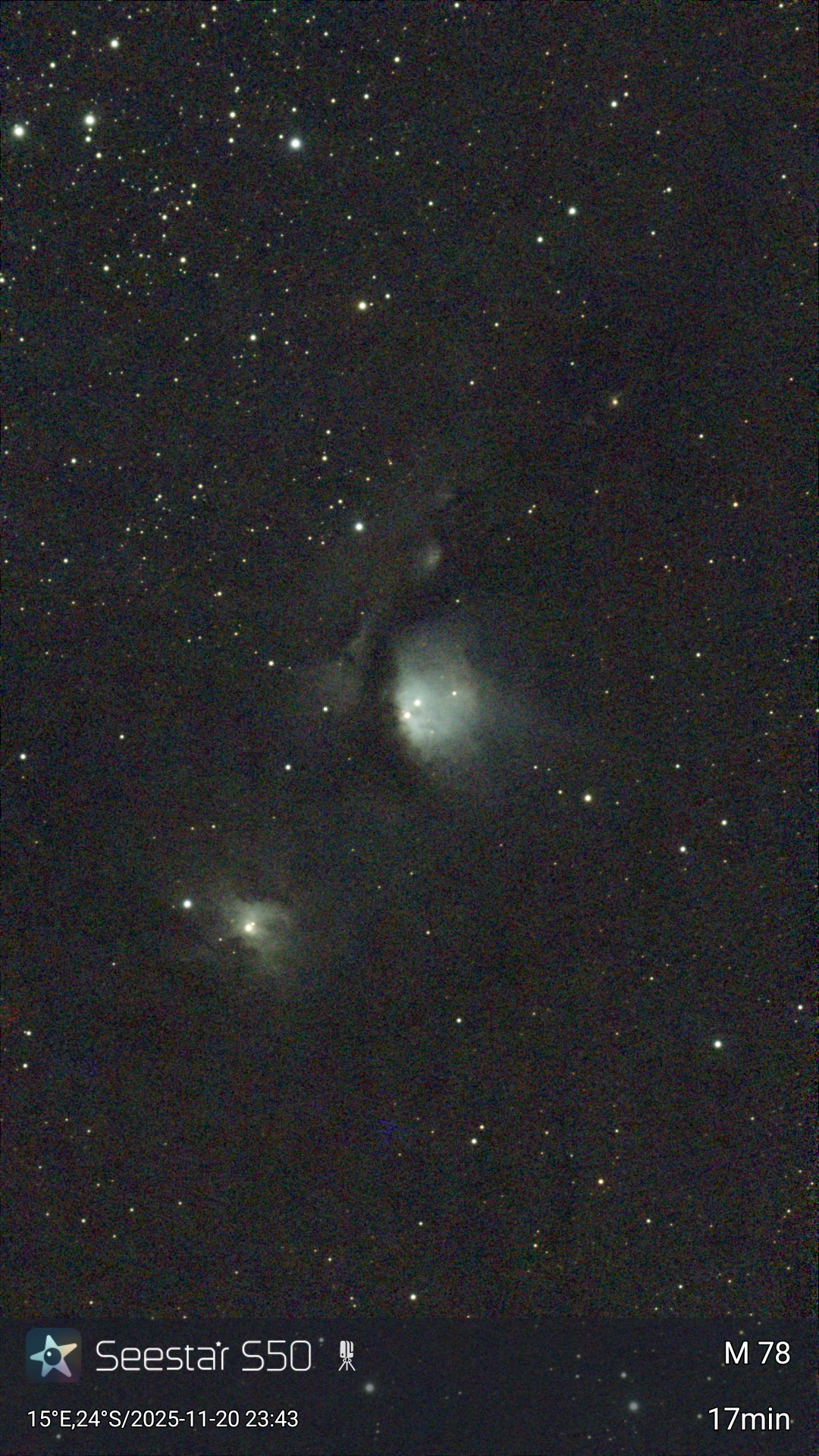
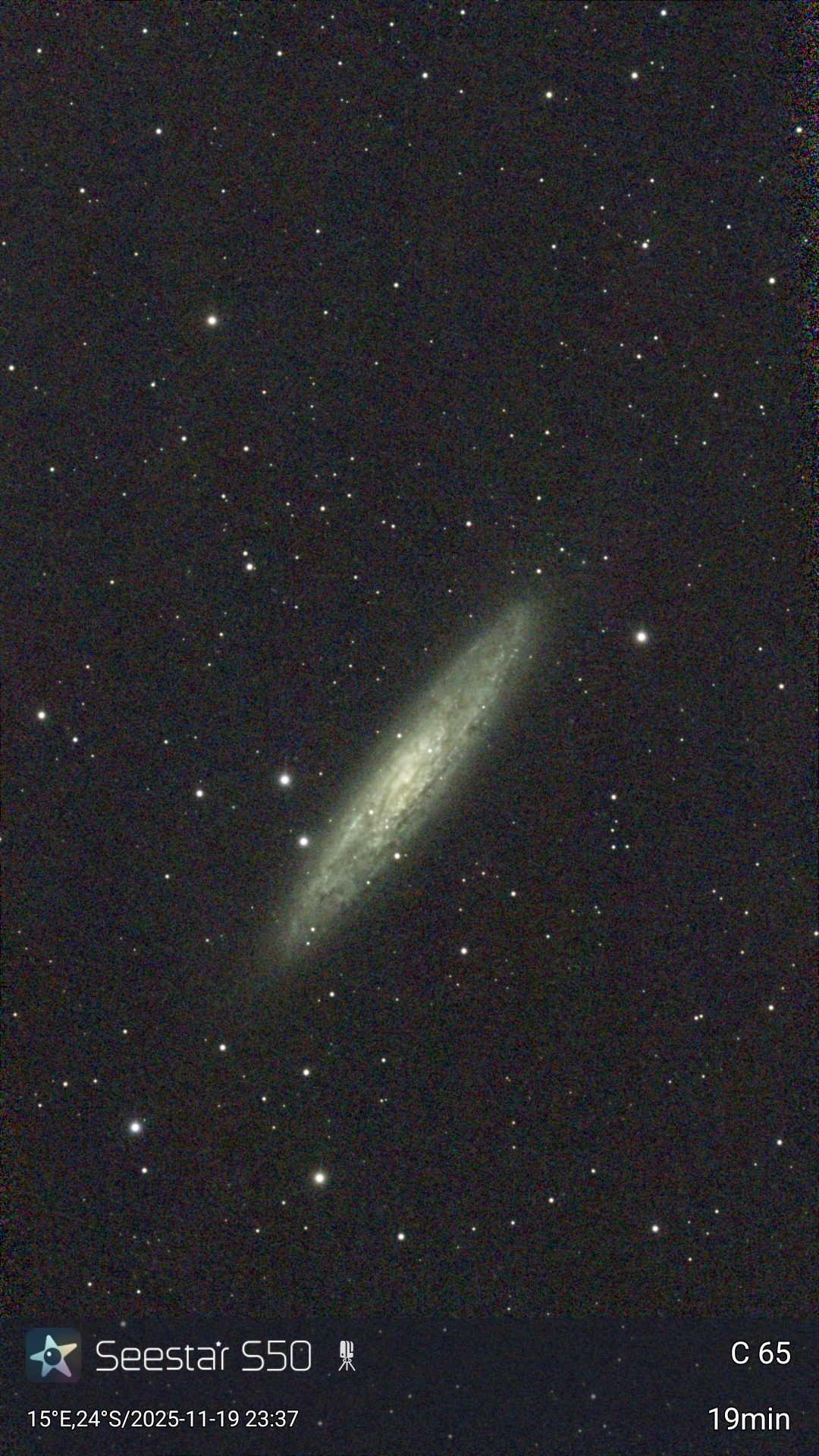
On the 12th at 21:50 I looked at Saturn very high is the sky, I could make out the moon Tethys to one side of the planet with Dione, Rhea, Titan and Iapetus to the other side, normally in the UK, I can only see Titan, the second largest moon in the solar system. Even though they are only points of light I had never seen Tethys, Dione, Rhea or Iapetus before. M 54 and M 75 are small GC’s in Sagittarius, both having a bright core but a FB to look at? C 90, in Carina is a planetary nebula (PN), to me it looked like an out of focus star, very dim to look at. Back to Orion and M 78 just above the belt stars, could make out the two brightest stars and a hint of nebulosity, another first for me. NGC 253, known as the Silver Coin galaxy or C 65 in Sculptor is an intermediate SG, I could make out some good detail of this galaxy.
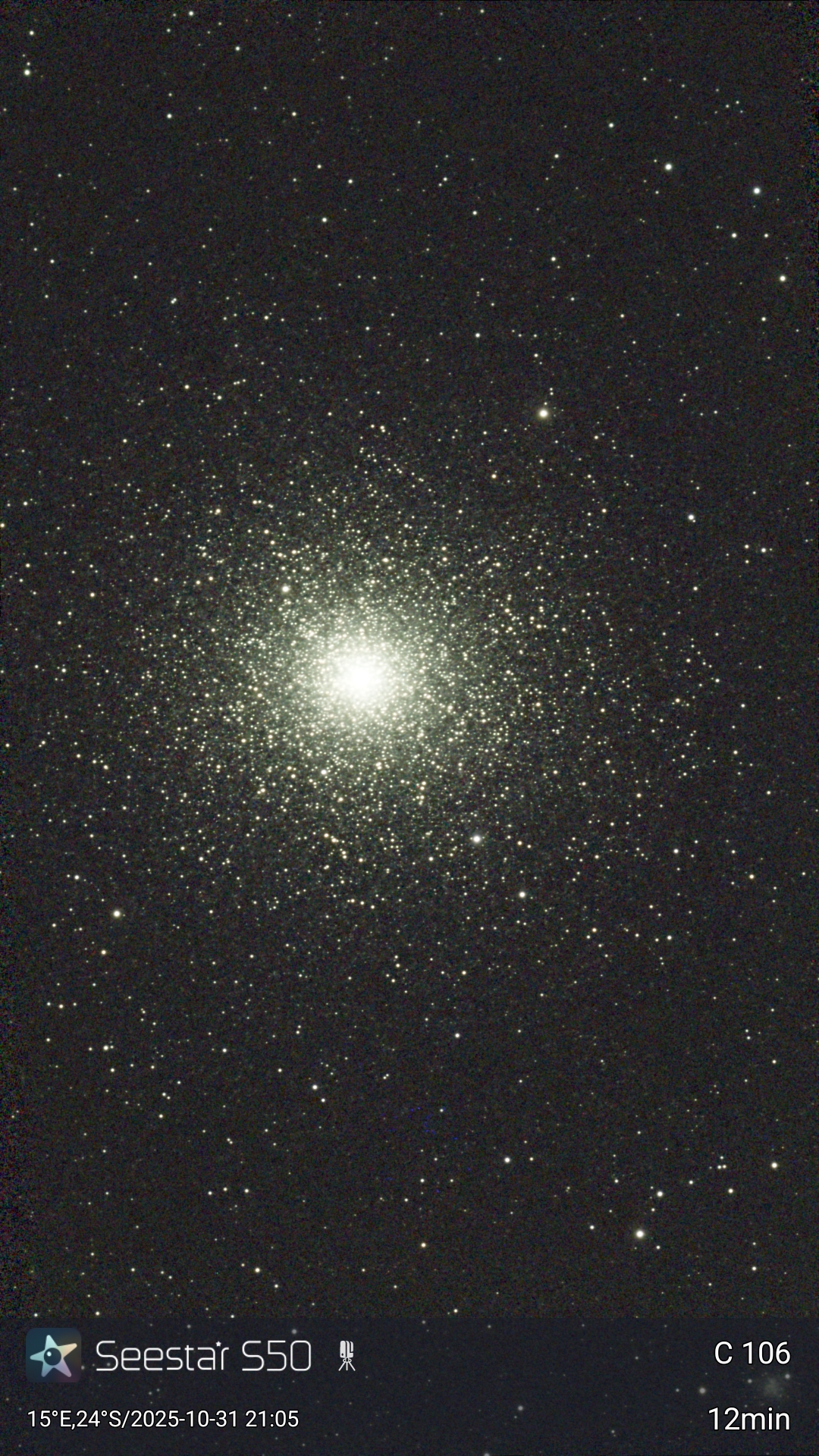
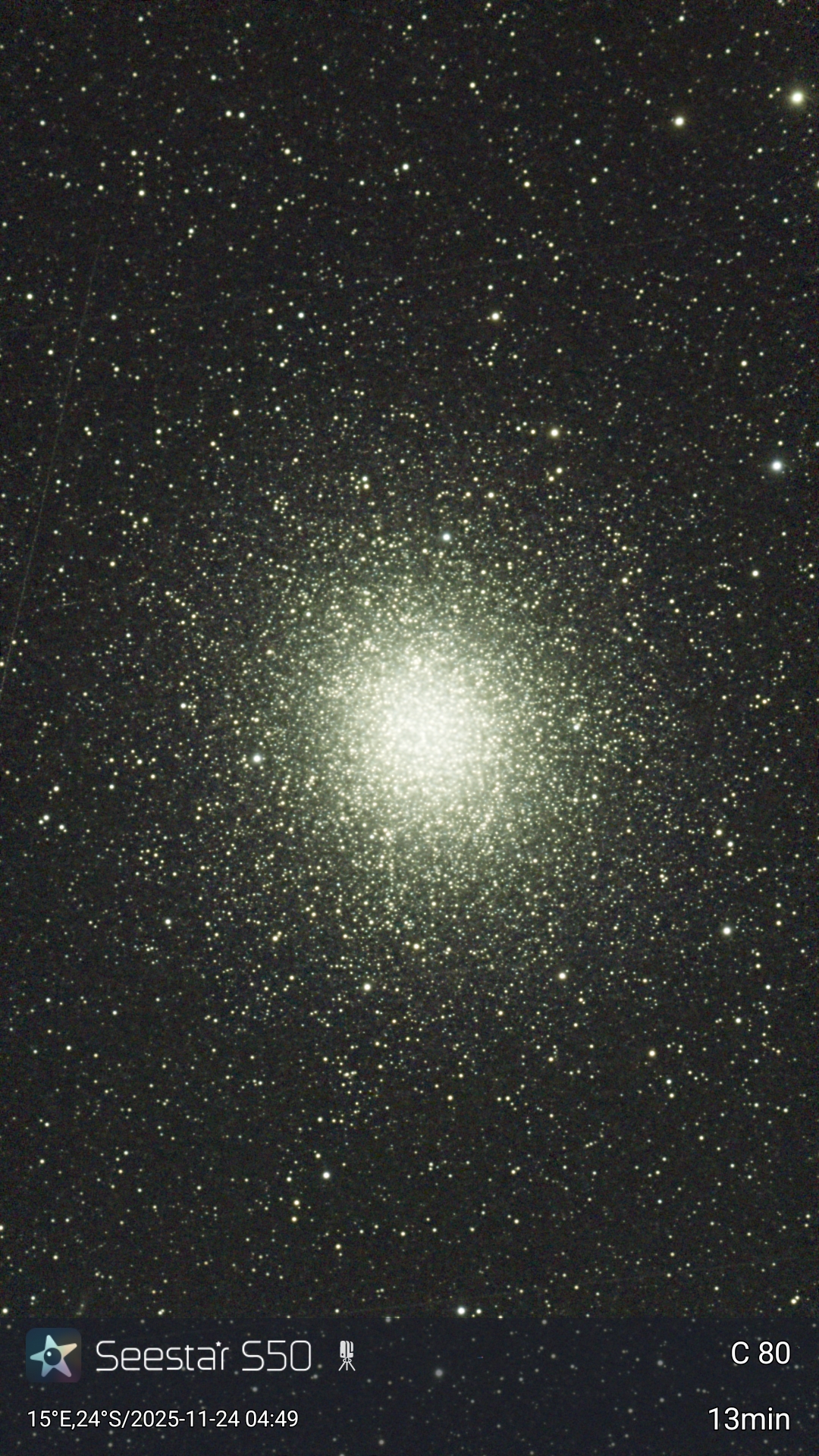
NGC 2438 is a PN within M 46, an OC in Puppis, this PN is an out of focus star to look at. This PN I have tried many times to look at but never picked it up, does not help having a magnitude of 10.6, probably beyond the limit of my own telescope back in the UK? To see the best GC in the whole sky I had to get up early in the morning (around 3:00 am) to view Omega Centauri, NGC 104 or C 80, this is a large GC but seemed dimmer than 47 Tuc, I put this down to being low in the sky and facing east, not too long before the sun would start to lighten the sky.
There are many more objects I looked at but this is just some of them, some good and some not so good. I did manage to see a few meteor trails in the sky, it was the height of the Leonids shower. My replacement (Kev, from Dorset) came out on the 30th and I left for the UK on the 2nd of December. Highest temperatures I had was around 39 °C during the day, too hot to be outside for very long. I hope you liked this one month long viewing log?
Clear skies.
Peter Chappell
AI Website Maker