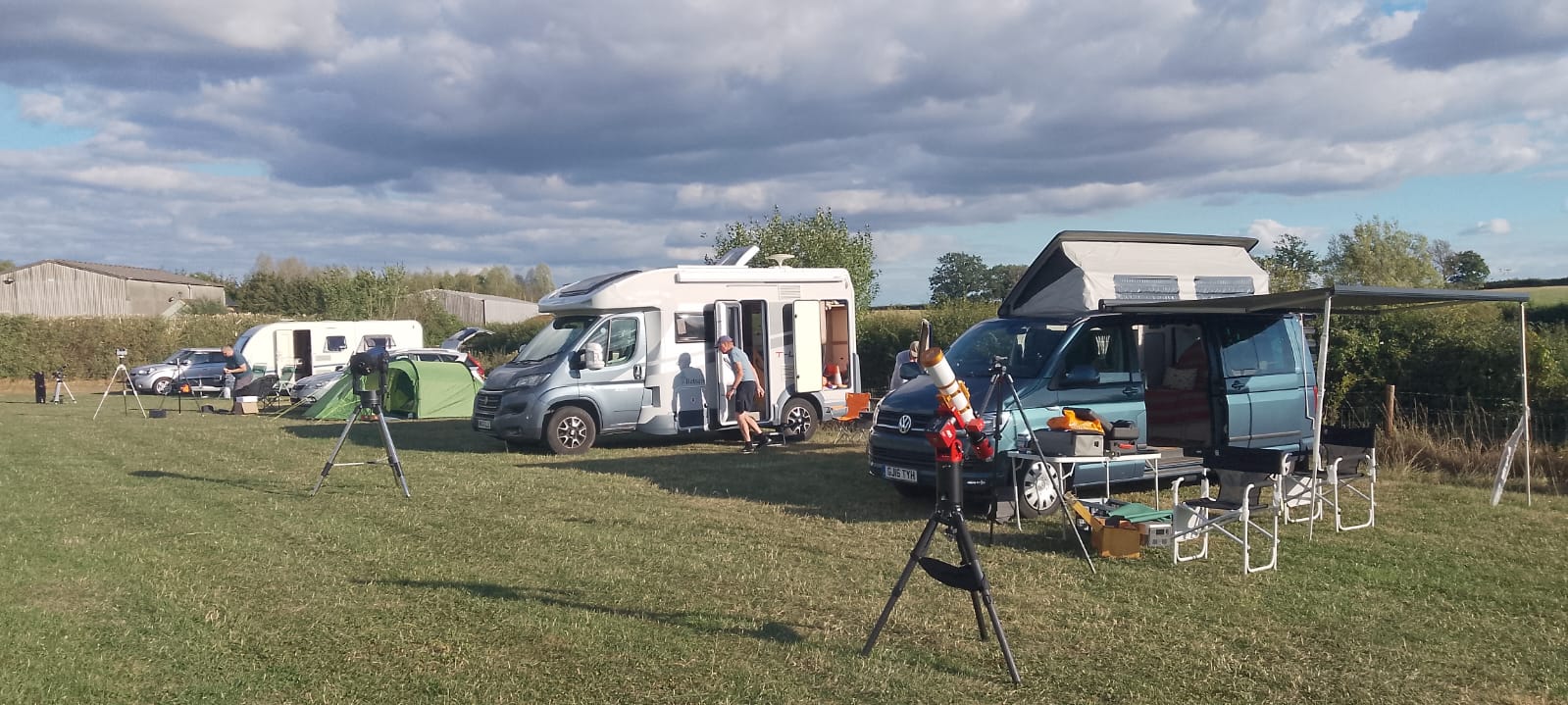
Swindon Stargazers annual Star Party made a return this year on the weekend of the first new moon in September. Weather forecast was not certain, but the decision was made to go for it on the 11th and 12th of September
We had arranged two weekends, choosing the most likely for weather. The second, back up date in October proved quite good too.
Six members set up various living accommodation, from humble tent to all mod cons motorhome!
Thankfully the Friday night proved excellent, once early evening clouds parted. Rob, who this year organised the event stuck with most visual observing through his old Helios Reflector. The imagers ranged from elaborate rigs to a pair of Dwarfs!
With the exception of Grant and Tony, the rest of us pack it in around 1.30 am, the dew just too much by then.
Saturday dawned a lovely, sunny day, with the smell of bacon cooking! However the forecast for Saturday night was cloud with drizzle later on. So all but Rob departed. Rob stayed on, practicing some solar imaging in between the clouds. Fish and Chips, and a pint at Malmesbury then followed!
The club would like to pay it's appreciation to Rouselands Farm Campsite for hosting us again this year. Its a great spot. Already now looking forward to next year and the possibility of a spring star party too!
Rob.
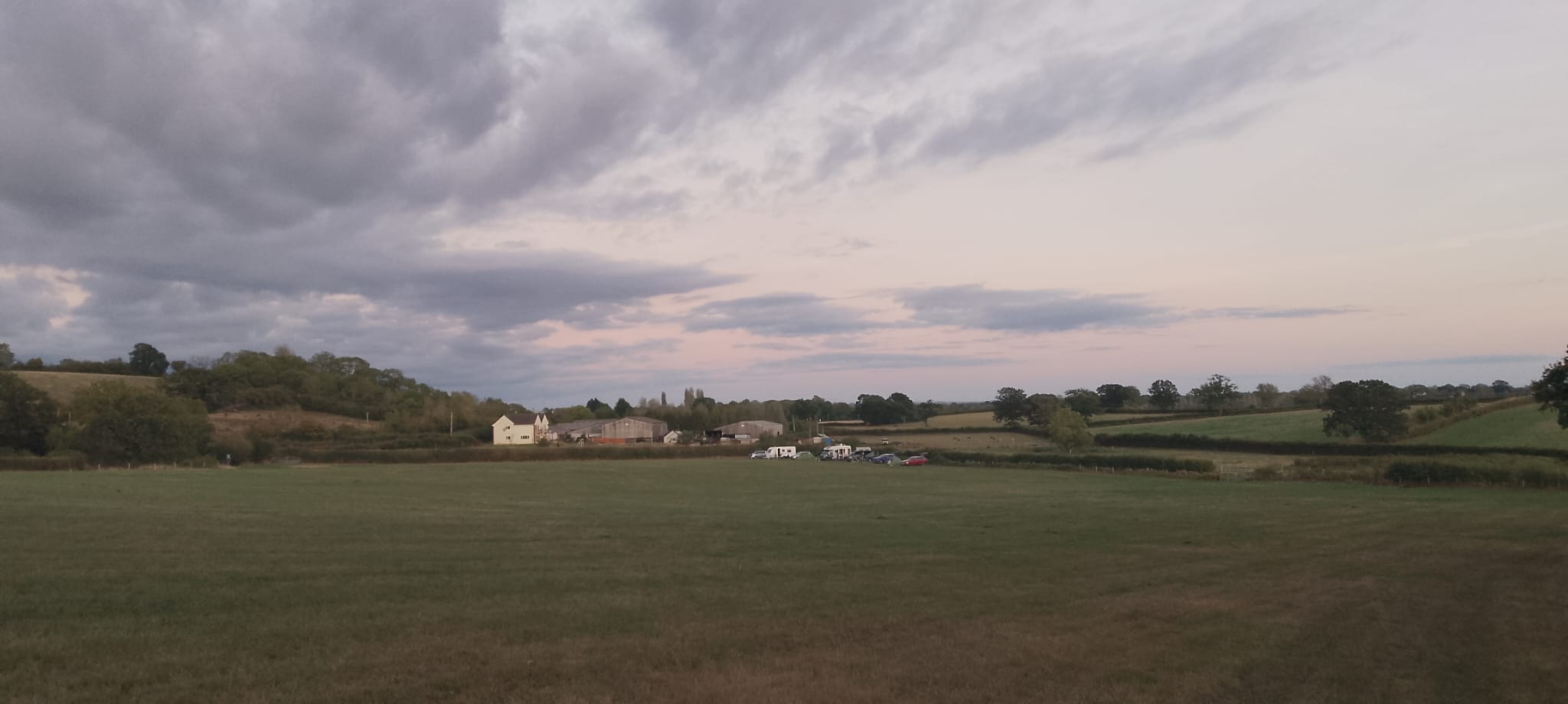
Viewing Log for Swindon Stargazers annual Star Party
Rob Slack took over the planning of the Star Party after Damian O’Hara had moved to Poland. He arranged one in September with a backup for October assuming the weather was against us around the new moon. Lucky for the club, it looked like the first one was a go ahead.
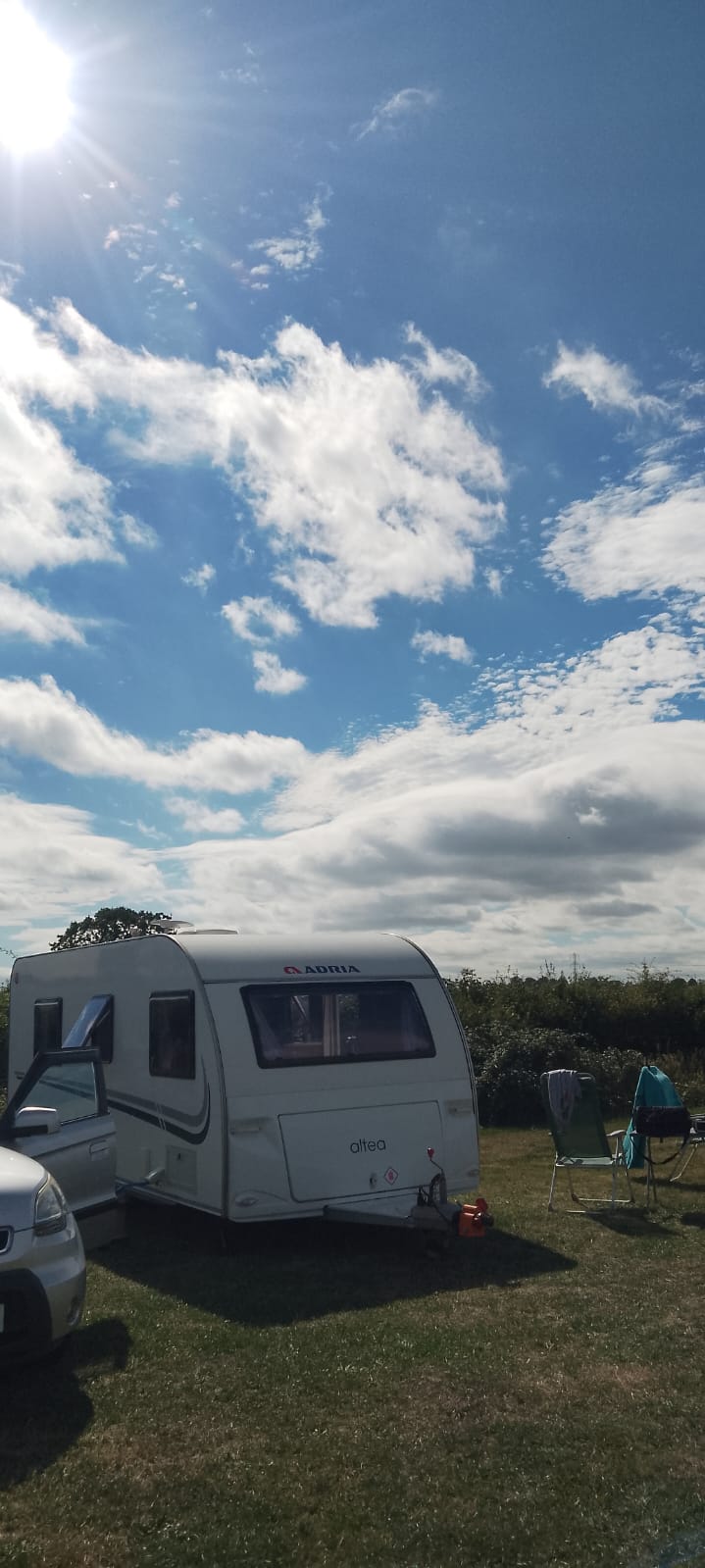
Six brave souls (namely Rob, Aide, Grant, Tony, Richard and myself) arrived on the Friday afternoon at Rouselands Farm campsite near Brinkworth. We were met with fairly clear skies and temperatures in the low 20’s. After setting up base, some in tents, caravan or campervan, while I brought along the wife’s motorhome and was set up within 10 minutes. We all had our evening meals, it was a case of waiting until it got dark enough for viewing. I had brought along my trusted Meade LX90 GOTO telescope and would be using a Pentax 14 mm eye piece, as well I would be taking pictures of some of the deep sky objects I had a look at. I think all of the members had their gear set up in daylight, at 20:27, it was dark enough for the telescope to do the initial set up. After I told it where Polaris was and levelled the telescope, it went off and found Arcturus and Altair, some minor adjustments and the telescope was ready for the evening. This was my first use of any astronomy gear since early May (I general do not go out and do any viewing in the summer time as I would not really start until after 23:00 or later?). Before I had left home I made sure the battery for the telescope and the Seestar S50 were fully charged! When I started the temperature was 17°C with no wind and little cloud around.
Tonight I was interested in looking at the constellations of Scorpio and Sagittarius, both of these remain very low in the sky and are really only seen during the short summer nights. I could make out a red star in the sky, this turned out to be Antares (the Rival of Mars), a massive red supergiant and the 15th brightest star in the night sky. This was a nice red star to look at. Still in Scorpio and a bit higher is Messier (M) 80, a globular cluster (GC), it was a faint fuzzy blob (FFB) to my eyes. It did not help being only 9 ° above the horizon. After I left Scorpio and went to Sagittarius, I hoped to view all 15 Messier objects in this constellation before it set? First target was M 20, the Trifid nebula but I could not locate this diffused nebula (DN), it is difficult to view with the eyes but easy with a camera. Back to GC’s and M 69, this was a fuzzy blob (FB) but could not make out any detail of this GC. Not far away at the bottom of ‘Teapot’ asterism is M 70, another GC, hard to see. M 54 was a bit better, this GC and FB had a hint of a core, and it was the same with M 28. M 22 was totally different, this GC is large and bright, I could make out some stars on the edge of this cluster. M 8, the Lagoon nebula is another DN with a hint of nebulously with an open cluster (OC) nearby. My first OC of the evening was M 21, a small dim cluster with not many stars in the group. M 25, is a large and sparse OC with not many stars in it. M 24 is known as the large Sagittarius Star Cloud, I could make out some stars but nothing else. M 17 is known as the Swan or Omega nebula, this DN is a large grey blob to look at. M 18 is a small dim OC with not many stars in the cluster. M 75 might be overlooked as it right on the border with Capricornus and a fair distance from the other Messier objects in this constellation. This GC was a FB to look at with a bright core, M 75 is the most distance GC known, to date. Only 8 ° above the horizon was M 55, another GC but I could not locate it, even with GOTO equipment? The final object was M 23, a large but dim OC with lots of stars in the group. By now the planets had come up, first was the ring wonder Saturn, as usual I could make out the second largest moon in the Solar System in Titan and I thought I could make out a another dimmer point of light, hopefully Rhea? Looking at the App Stellarium it turned out to be the moon Dione, I think. The rings are slowly opening up again but currently only 7 ° open. Ahead of Saturn in the sky is Neptune, just a pale blue dot to look at. My final object for the evening was M 57, the Ring Nebula, this Planetary nebula as usual was good to look at.
The time was now 00:10 and time to pack up as dew was a real problem with the equipment being used, some people stayed out a bit later than me. The temperature had dropped to 12 °C with no wind or clouds in the sky, brilliant viewing conditions.
Only Rob stayed for the Saturday session, I am glad that I did not stay as the evening was totally clouded out.
Clear skies.
Peter Chappell
Below: Pictures captured by Peter using a ZWO SeeStar S50 APO Telescope
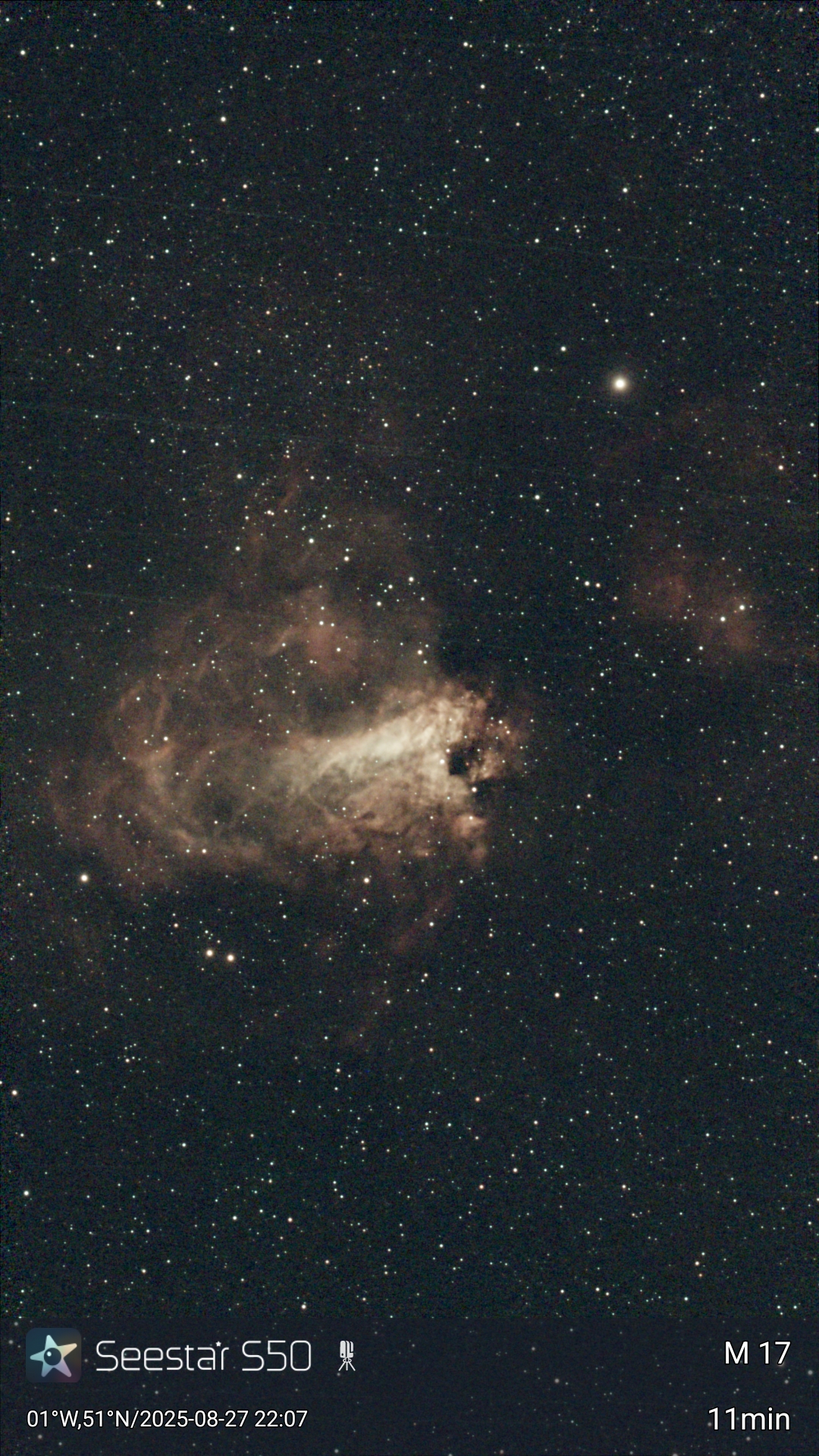
M17 Omega nebula
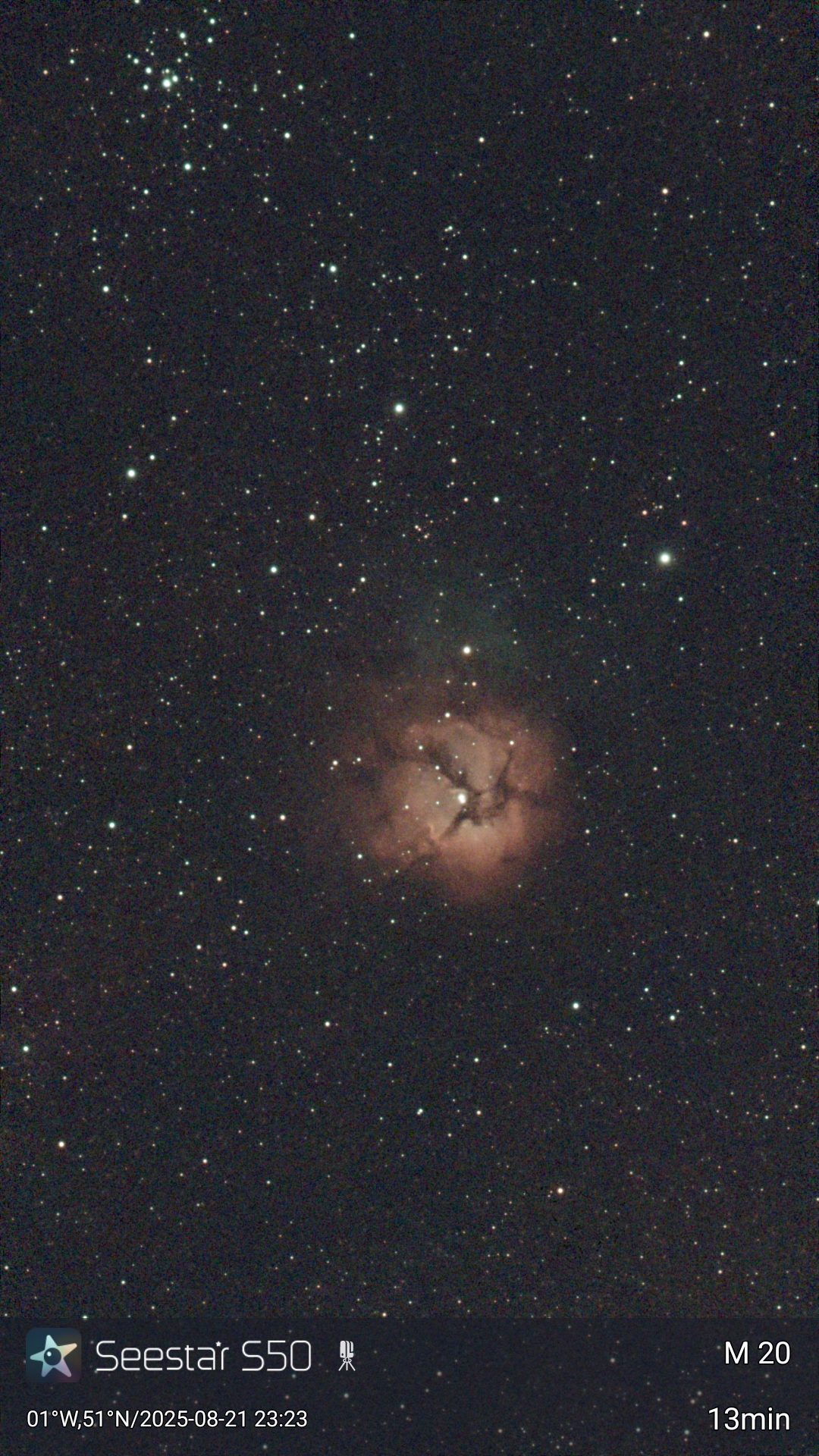
M20 Trifid Nebula
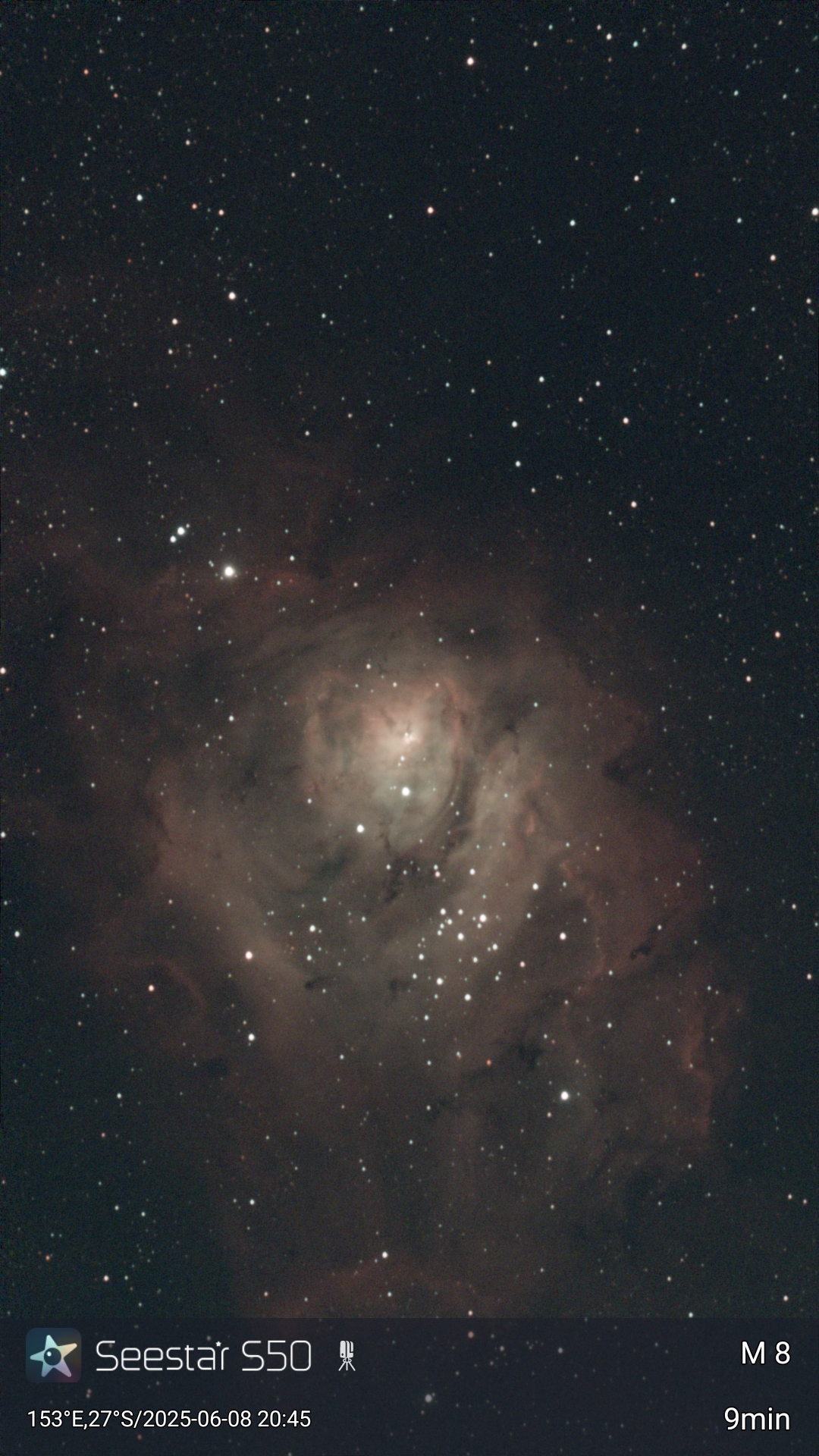
Image Description

Best AI Website Maker